
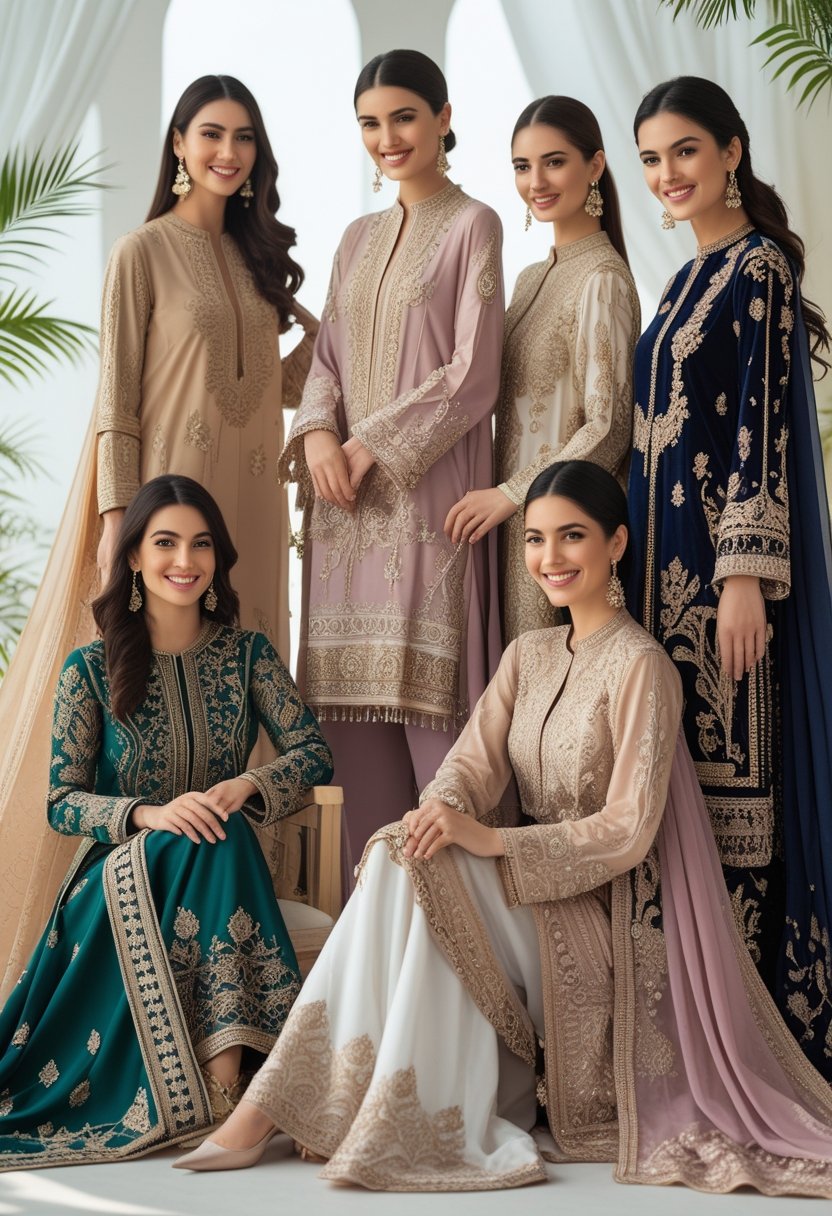

“Eid Dresses 2026 for Women – Latest Fashion Trends, Styles & Outfit Ideas” combines traditional elegance with modern style, offering a wide range of choices from embroidered salwar suits and anarkalis to chic shararas and kaftans. The key trend is the blend of vibrant colors, intricate embroidery, and versatile designs that suit both casual and formal celebrations. These styles allow women to express cultural heritage while embracing contemporary fashion.
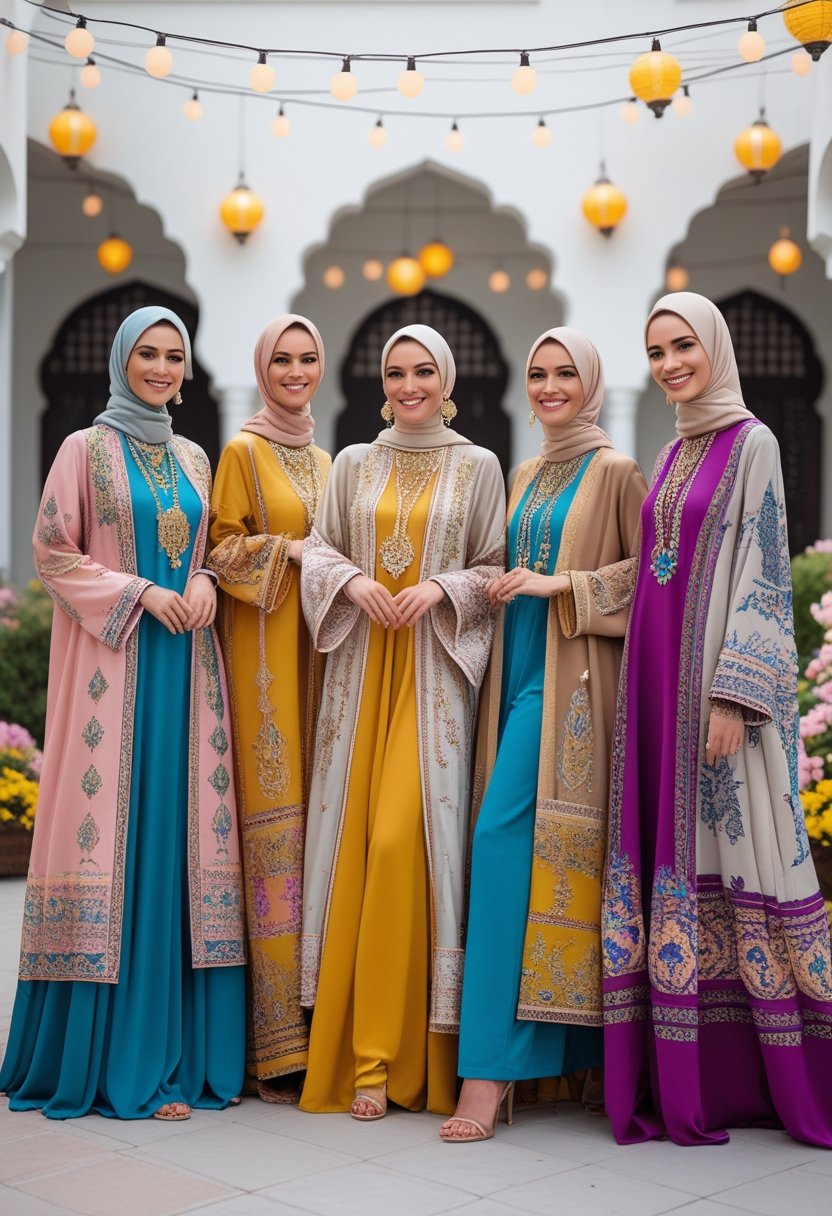
This year, comfort and sophistication are equally important, with lightweight fabrics and stylish cuts designed to fit the festive mood and warmer weather. Women can expect to find statement pieces like Palazzo suits and flowy kurtis that balance modesty with trend-forward elements.
The latest collections emphasize flexibility, allowing mix-and-match options that make dressing for Eid both practical and visually striking. This balance of tradition and innovation ensures every woman can find a look that feels both personal and appropriate for the occasion.
Key Eid Fashion Trends for Women in 2025
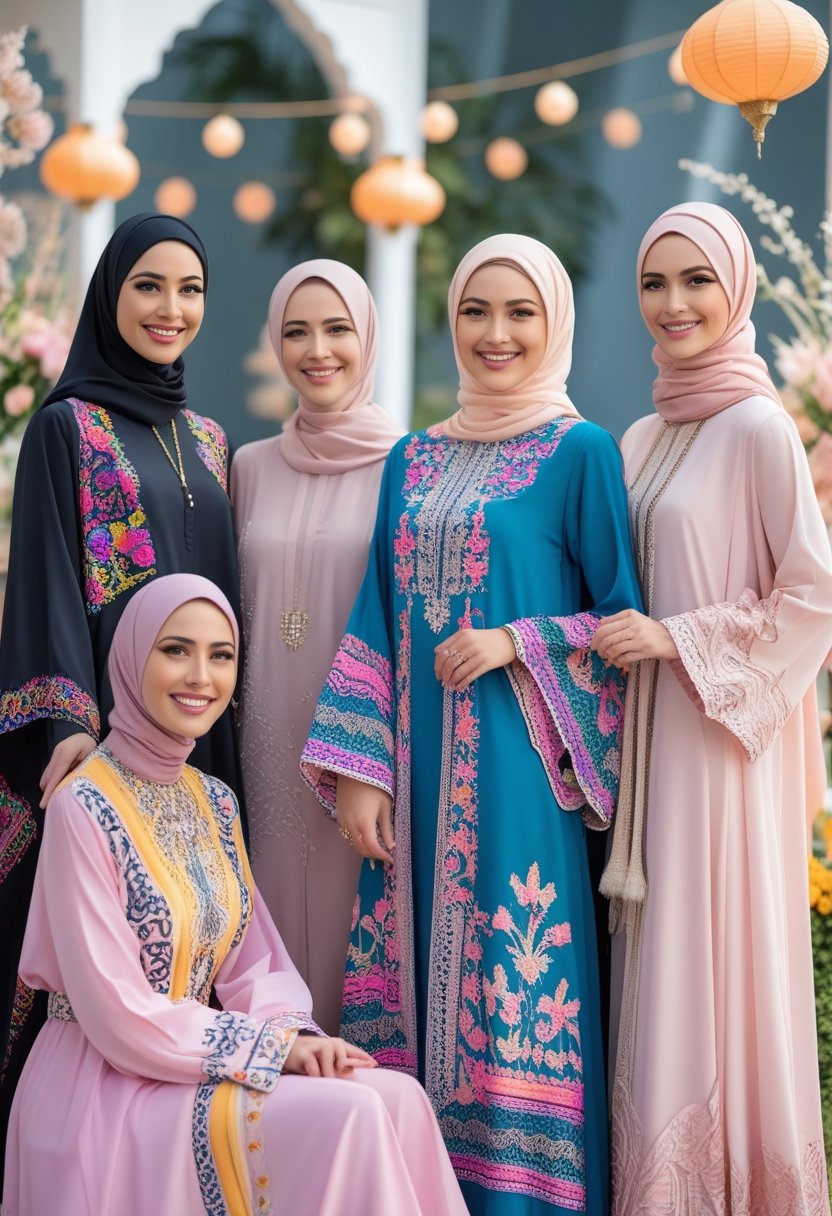
Eid fashion for women in 2025 highlights a careful balance between heritage and contemporary design. The trends focus on combining traditional clothing structures with fresh aesthetics, choosing the right fabrics for comfort and appearance, and embracing rich color palettes inspired by jewel tones.
Blending Tradition with Modern Style
Women’s Eid outfits in 2025 often merge classic silhouettes with modern details. Traditional options such as Anarkali, Lehenga Choli, and Salwar Kameez remain popular but are updated with innovative cuts and subtle embellishments.
Modern Eid fashion includes styles like the Eid Kurti or layered ensembles that feature asymmetric hems or fusion elements from Western fashion. This blend allows for a diverse wardrobe that respects cultural roots but also appeals to younger generations seeking individuality.
Accessories are also evolving, aiming for minimal yet impactful designs to complement these hybrids.
Popular Fabrics and Textures
Flowy, breathable fabrics dominate Eid outfits in 2025, offering ease and elegance. Materials like chiffon, georgette, and silk blends are favored for their light feel and graceful drape.
Embroidered textures maintain significance, especially with intricate threadwork and bead embellishments that add understated luxury. Many designers use a mix of sheer and opaque textiles to create depth without sacrificing comfort.
These fabric choices are ideal for the climate around Eid, ensuring outfits are both beautiful and practical.
Color Palettes and Jewel Tones
The color trends draw heavily on rich jewel tones such as emerald green, ruby red, and sapphire blue. These shades provide vibrancy while maintaining a refined appearance fitting for celebratory occasions.
Pastels also have a presence, often combined with metallic accents to highlight details without overpowering the outfit.
Women often select colors that enhance the embroidery or fabric finish. Jewel tones in particular complement a variety of skin tones and add a sophisticated touch to contemporary and traditional Eid fashion collections.
Essential Traditional Eid Attire
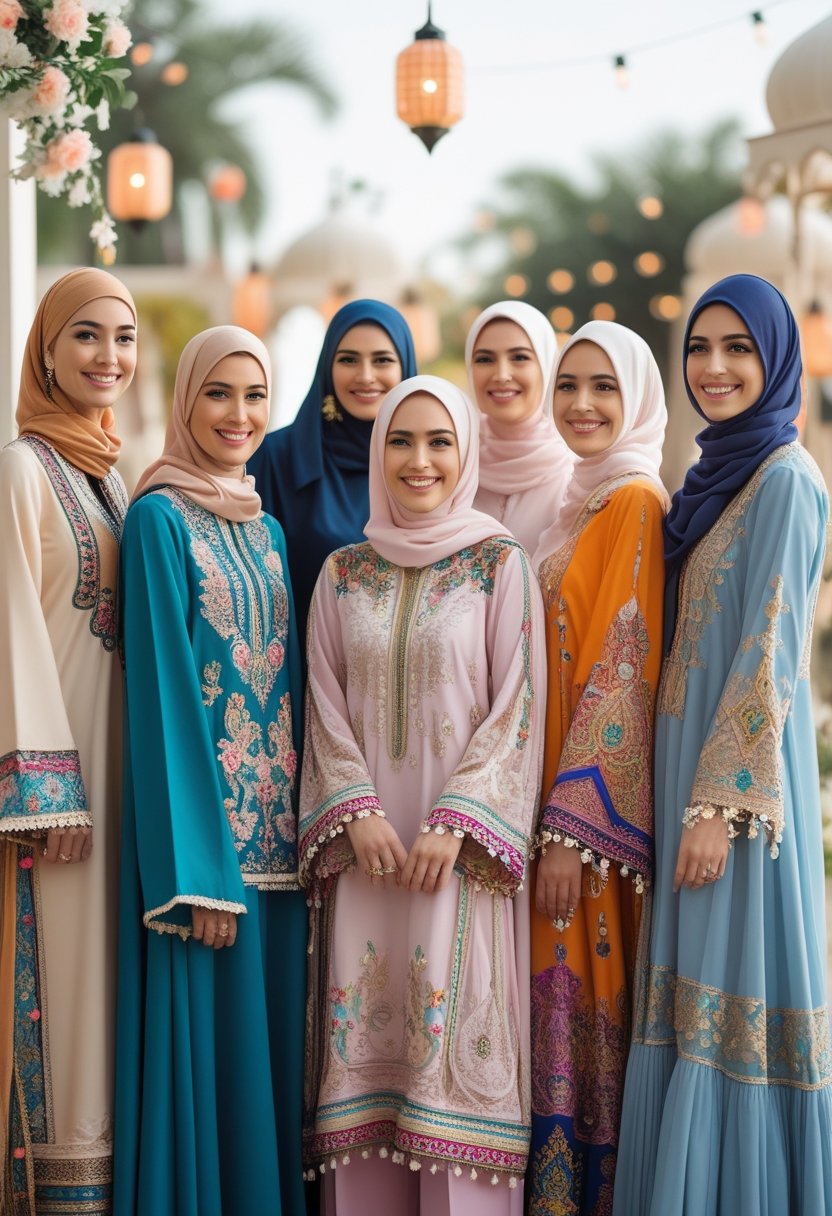
Traditional Eid attire for women combines elegance with cultural significance. Key styles include embellished suits, flowing dresses, and comfortable yet stylish separates. These options emphasize intricate craftsmanship and modesty, aligning with the celebration’s spirit.
Anarkali Suits and Zari Work
Anarkali suits remain a staple for Eid due to their graceful silhouette and versatility. The long, flared kurta paired with fitted churidar or leggings highlights feminine elegance.
Zari work, featuring fine metallic thread embroidery, often embellishes the neckline, sleeves, and hem of these suits. This intricate detail adds a festive shimmer without overwhelming the outfit.
Anarkali suits suited for Eid tend to use rich fabrics like silk or georgette, enhancing the garment’s regal feel. Ideal for both daytime and evening celebrations, they balance tradition and contemporary style effectively.
Kaftan Dresses and Abayas
Kaftan dresses are valued for their roomy fit and luxurious drape. They are typically crafted from lightweight materials such as chiffon or silk, providing breathability during celebrations.
Often adorned with subtle embroidery or beadwork, kaftans offer a modest look while allowing freedom of movement. Their varied sleeve lengths and neck designs suit different tastes and occasions.
Abayas, similarly loose and modest, have become increasingly popular for Eid. Many show off delicate patterns or appliqué, combining simplicity with elegance. Both kaftans and abayas serve as practical yet stylish choices that respect traditional modesty norms.
Maxi Dresses and Palazzo Suits
Maxi dresses provide a modern take on traditional attire. They feature floor-length hemlines and can range from minimalist designs to those accented with embroidered borders or lace trims. These dresses are suitable for women seeking a blend of comfort and sophistication.
Palazzo suits pair wide-legged trousers with a tunic top, offering an airy and stylish alternative to conventional salwar kameez. They often incorporate traditional prints or embellishments like zari or threadwork to maintain cultural authenticity.
The combination of flowy palazzo pants and tunics allows for ease during long celebrations. Both outfits are versatile for formal Eid events or casual family gatherings, catering to diverse style preferences.
Contemporary Silhouettes and Styling
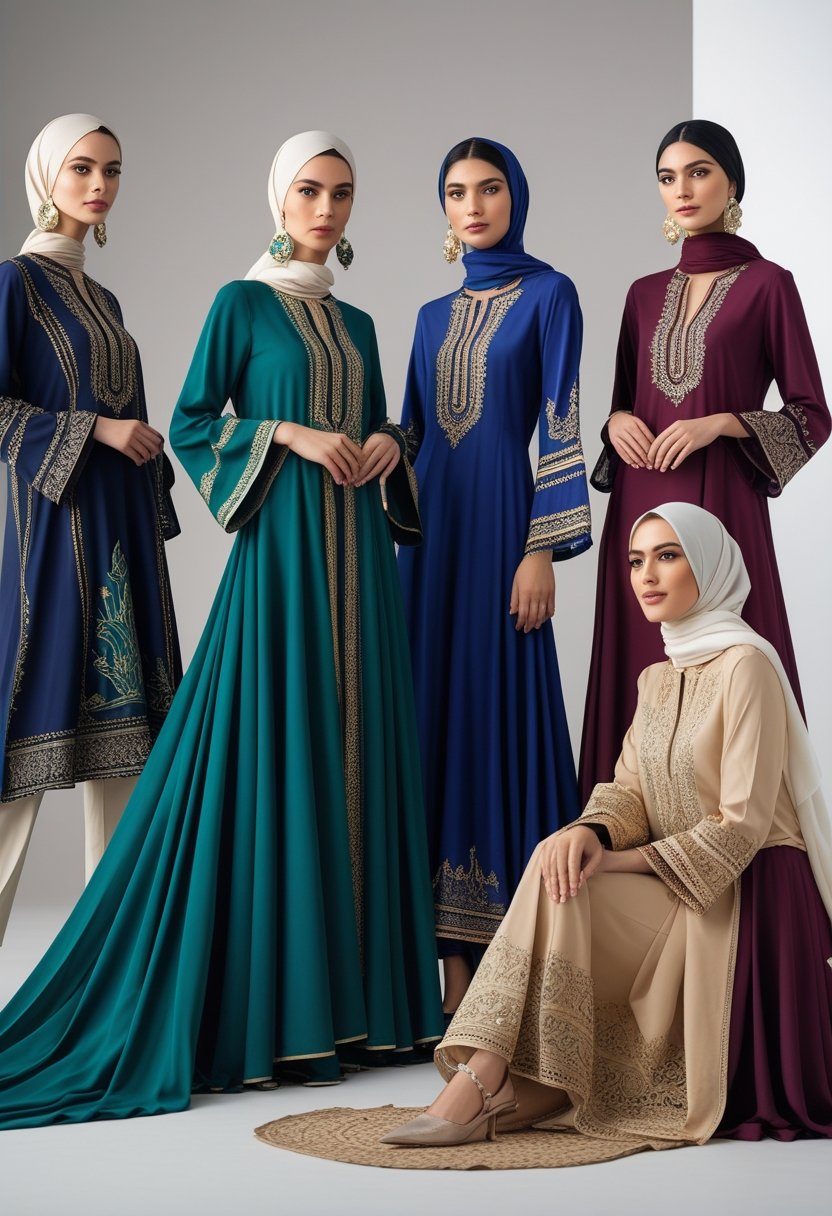
Modern Eid fashion embraces new shapes and cuts that complement traditional fabrics and designs. Contemporary silhouettes focus on clean lines and versatile styling, allowing women to blend cultural heritage with current trends in a refined manner.
Fusion of Eastern and Western Elements
This approach mixes classic South Asian fabrics like silk and chiffon with Western tailoring techniques. For instance, structured blazers paired with embroidered kurtas create a polished yet festive look.
Designers often incorporate elements such as button-down closures, collars, and cinched waists into traditional garments. This fusion allows for easy movement and layered styling. Accessories like belts and minimal jewelry further enhance these pieces without overwhelming the outfit.
The color palette remains vibrant but is balanced with neutral tones, making these outfits suitable for both daytime and evening Eid events. Overall, this blend appeals to women seeking a modern interpretation of their cultural attire without sacrificing elegance.
Asymmetrical Kurtas and Cape Tops
Asymmetrical cuts have become a key feature in contemporary Eid fashion for women. Kurtas with uneven hemlines or side slits add visual interest and create a flattering silhouette.
Cape tops complement these designs by introducing fluidity and a sense of drama while maintaining modesty. Made from lightweight fabrics, they offer comfort and ease during celebrations.
These pieces often incorporate subtle embellishments like threadwork or sequins along borders to maintain a festive look. When paired with palazzo pants or straight trousers, they offer versatility across casual and formal occasions, fitting well within modern style demands.
Fabrics and Embellishments
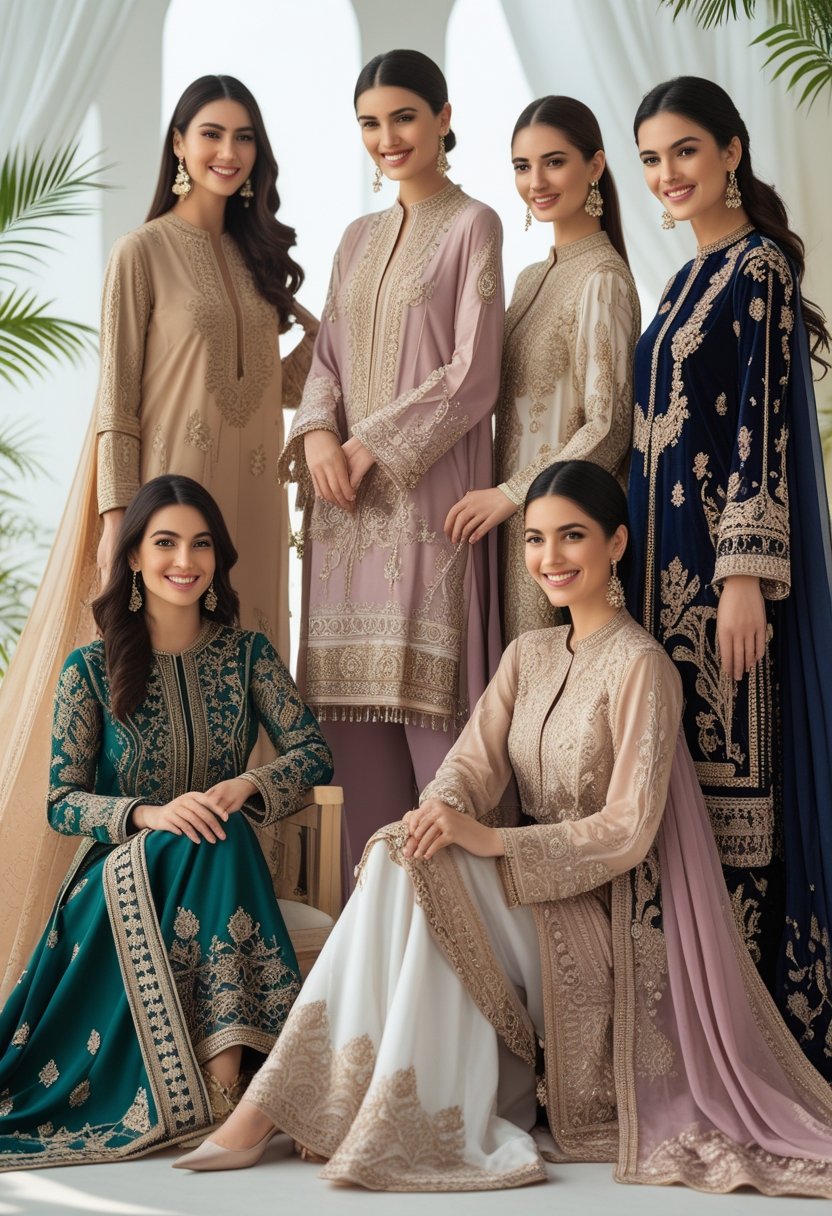
Choosing the right fabric and embellishments is essential for comfort and style during Eid. Light, breathable materials paired with detailed decoration create a balance between tradition and elegance.
Chiffon, Organza, and Silk Choices
Chiffon remains a popular fabric for Eid due to its lightweight, sheer texture, which offers both comfort and flowy elegance. It drapes well and is suitable for layered outfits or modest styles where ease of movement is important.
Organza is favored for its crisp texture and subtle sheen, making it ideal for structured garments like kaftans or shararas that require a bit of volume. It adds a delicate visual interest without overwhelming the design.
Silk is chosen for its smooth finish and natural luster, often used in more formal Eid attire. It works well in both heavier and lighter weights, providing richness to embroidered pieces and enhancing the vibrancy of colors like burgundy and jewel tones.
Intricate Embroidery and Decorative Details
Embroidery plays a pivotal role in elevating Eid fashion by blending tradition with modern design. Techniques such as zardozi and threadwork create detailed patterns on sleeves, hemlines, and bodices, adding texture without bulk.
Decorative elements like sequins, beads, and crystals are applied sparingly to maintain sophistication while enhancing the garment’s elegance. These embellishments highlight key areas of the outfit, such as necklines and cuffs.
The combination of detailed embroidery and subtle sparkles allows for garments that are festive yet comfortable, reflecting both cultural heritage and contemporary style trends.
Finishing Touches: Accessories, Footwear, and Henna
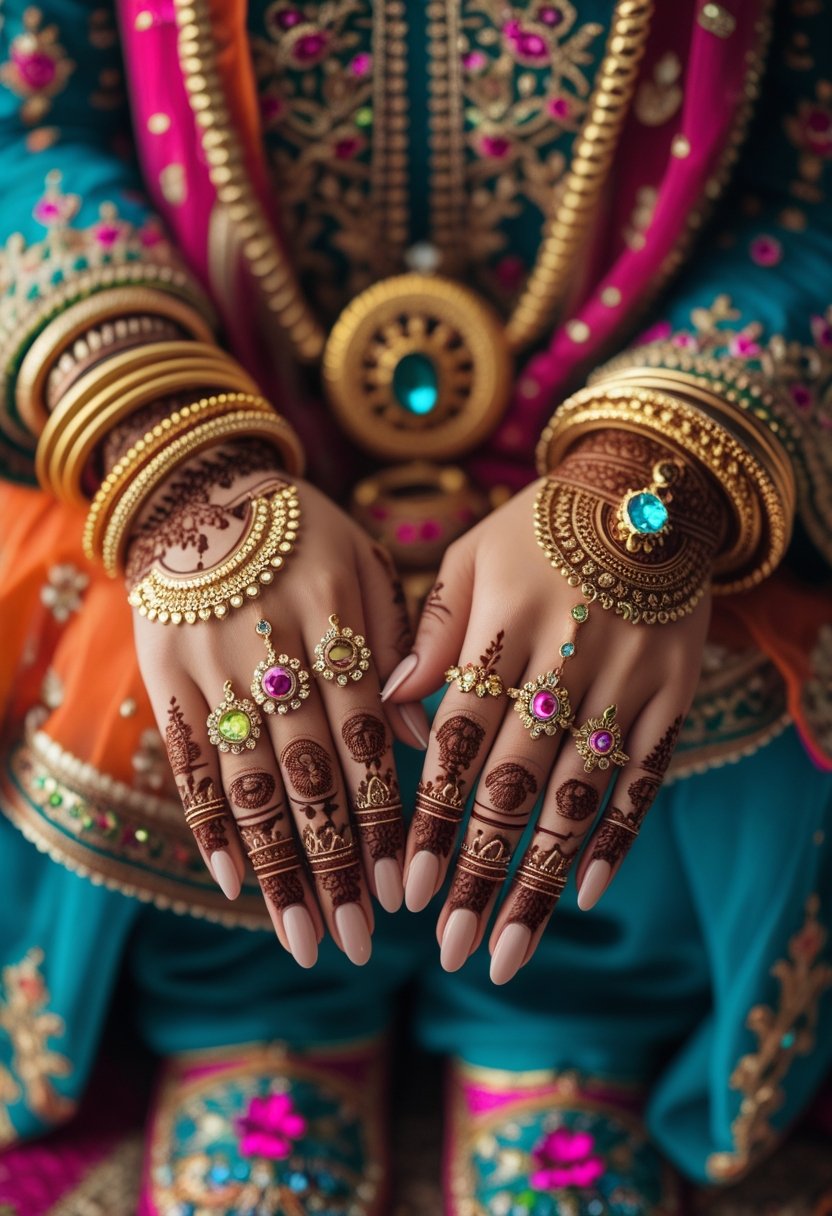
The right accessories, footwear, and henna complete an Eid look by adding detail and personal style. Carefully chosen elements enhance the outfit without overpowering it, emphasizing elegance and festive spirit.
Footwear: Heels and Khussas
For formal Eid occasions, heels provide height and sophistication. Block heels or stilettos in neutral or metallic shades complement embroidered or silk fabrics well. Comfort is key, so lightweight heels with cushioned insoles are preferred to maintain poise throughout celebrations.
Khussas, traditional embroidered flats, are popular for their blend of comfort and cultural authenticity. They often feature beadwork, sequins, or intricate thread designs, making them ideal for pairing with anarkalis, shararas, or saris. Their flat soles offer practical comfort while maintaining a festive look.
Accessorizing with Clutches and Jewelry
A matching clutch is essential to pull the outfit together. Compact clutches with embellishments like beads or stones add subtle sparkle. Colors that coordinate with the outfit’s palette help maintain harmony without overshadowing garments.
Jewelry choices focus on statement pieces such as chandelier earrings, layered necklaces, or bangles. Gold and silver tones work well, depending on the outfit’s fabric and color. Minimalist pieces can balance heavily embroidered clothing, while bold jewelry suits simpler dresses.
Classic Henna Designs
Henna patterns for Eid range from delicate florals to intricate geometric motifs. Bold designs often cover palms and extend to the wrists, symbolizing celebration and tradition. Subtler patterns, like fine lace or dots, suit those seeking a minimalist look.
Applying henna a day before Eid ensures rich, lasting color that complements festive attire. The choice of design can reflect individual style or cultural customs, making henna an important part of the finishing touches for many women.
Outfit Ideas for Different Eid Celebrations
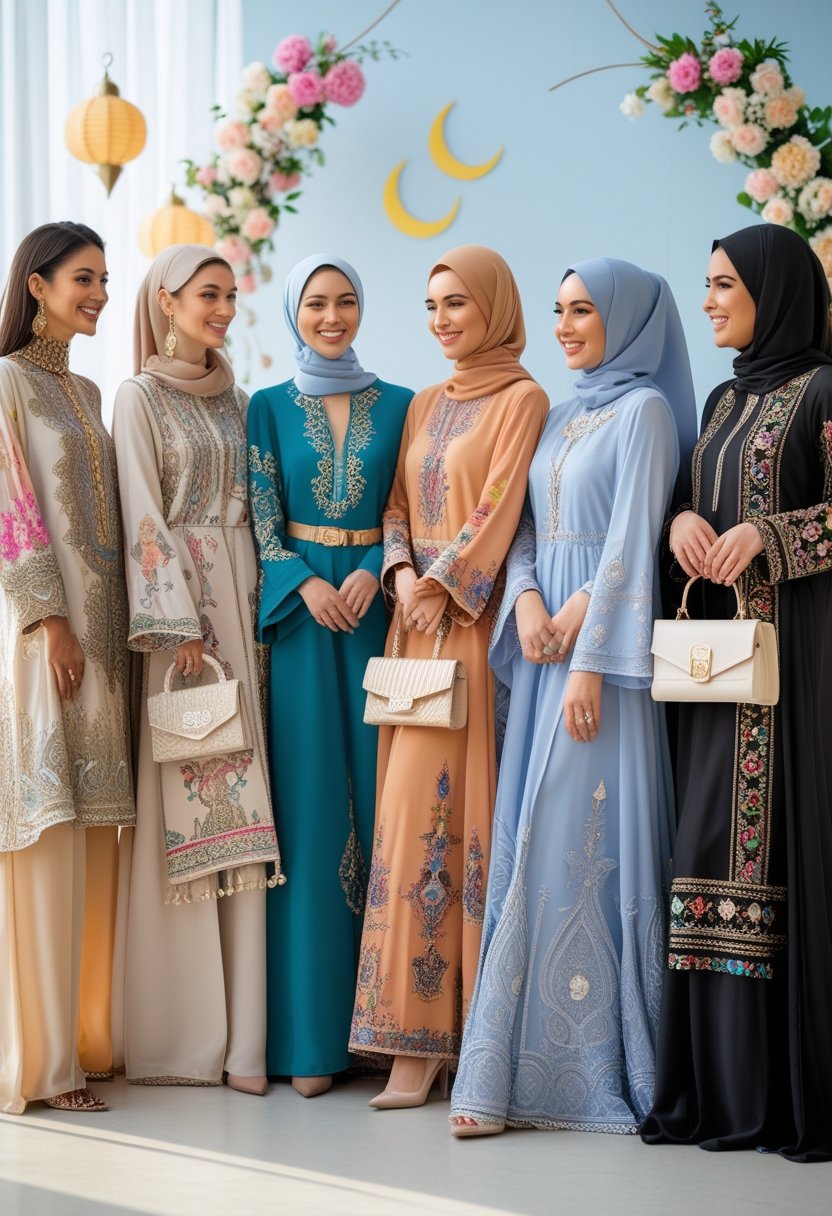
Eid celebrations vary in formality and timing, influencing women’s outfit choices. Lightweight, comfortable clothing suits daytime events, while more intricate, luxurious pieces are ideal for evening gatherings and formal occasions.
Casual Daytime Looks
For daytime Eid prayers and family visits, women often choose comfortable yet stylish outfits. Light fabrics like cotton or chiffon are preferred to manage warm weather after Ramadan fasting.
Popular choices include:
- Salwar suits with minimal embroidery
- Simple Anarkali dresses in pastel or neutral tones
- Flowy palazzo sets paired with casual accessories
Footwear tends toward flats or modest heels for ease. Light scarves or dupattas add modesty without overwhelming the look. These choices reflect respect for tradition while prioritizing comfort.
Elegant Evening Ensembles
Evening Eid events call for more elaborate and festive attire. Women often opt for richly embroidered lehengas, silk salwar suits, or designer Anarkalis in jewel tones and metallic accents.
Key details include:
- Intricate beadwork or zari embroidery
- Bold accessories like statement earrings or bangles
- Embellished clutches and stylish heels
Silk, satin, and brocade fabrics elevate the outfit’s formality. Evening styles balance tradition with glamour, making them suitable for family dinners or community celebrations following Ramadan’s end.
